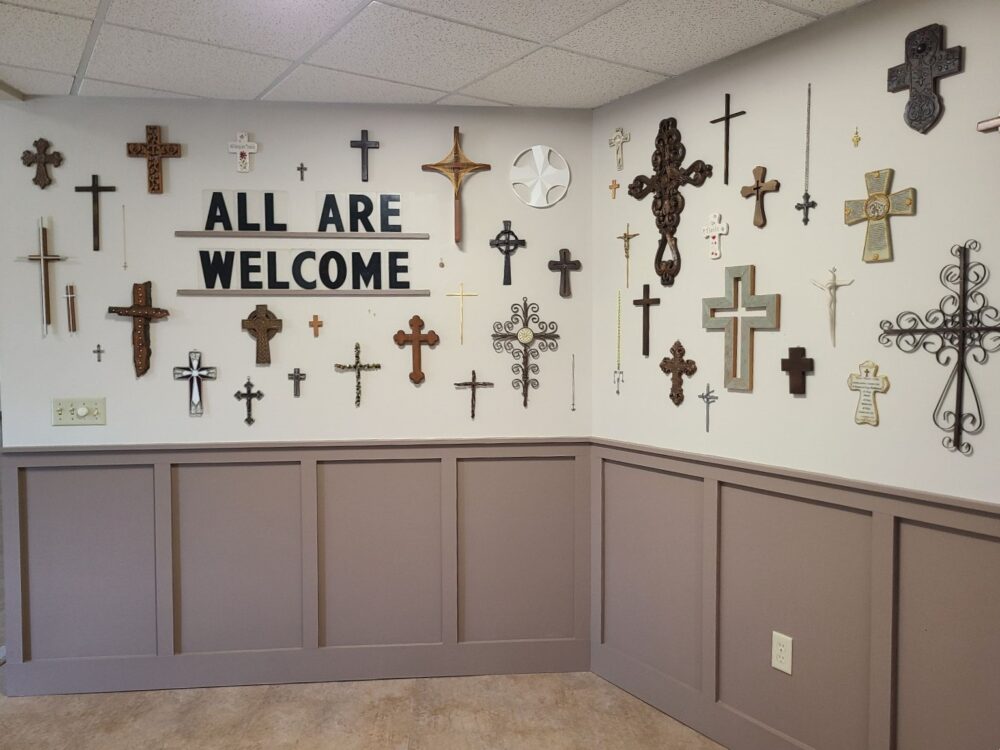
In 2011, following the congregational vote to remain a part of the ELCA, Holy Trinity had a sizeable segment of the worship community leave. This was a painful experience, but also one that clarified Holy Trinity’s missional identity and theological rootedness. One of the rituals found to be particularly meaningful at that moment was the development of a Cross Wall in the former Narthex. For those who brought in a cross or crucifix, it may have represented a wedding, funeral, baptism, confirmation, first communion, or some other spiritually important reason known only to the donor. Those crosses brought healing to a grieving church congregation composed of those who chose to remain after the division.
In the Christian faith, it’s helpful to articulate the difference between the “prosperity Gospel” and the “theology of the cross.” The prosperity Gospel, which is rampant, particularly in American Christendom, asserts that God rewards the faithful with particular blessings and privileges. The prosperity Gospel makes the claim that if we are faithful to God, God will reward us.
The “theology of the cross,” however, is a more Lutheran theological framework that states God is perhaps most clearly understood in times of suffering. The cross becomes the identifying event that reveals what humans can know about God and where God can be found today. God doesn’t cause pain and suffering, but God positions God’s self alongside those who need God the most. We see God best through the cross.
It is fitting during a time of grief and difficulty, Holy Trinity found meaning in bringing personal crosses to church. This Cross Wall reminded people that God was with them in hardship, and God was bringing redemption and resurrection to this congregation in a new chapter of life and ministry.
In 2025, following the interior remodeling associated with NEXT Facility Project, the Cross Wall was relocated to the entrance of the Fellowship Hall, to be more visible upon entering the new primary door, Door 2. New generations of Holy Trinity community members have added their crosses. Each is a cross of significance, with a story to tell.
As you gather in front of the Cross Wall, you are encouraged to share stories of the crosses you see. Can you learn the stories of all of the crosses? If you see someone pointing to their cross, take time to listen. If you brought a cross, please share why it’s important to you.
As we put our trust in a God who is found in places of suffering (theology of the cross), we are reminded of the promise that God brings hope out of despair, healing where there was pain, and new life out of death.
Written by Pastor Ben Hilding
March 2025